


2026 Eco-Gardening Symposium Draws Strong Crowd and Community Energy

On Saturday, April 18, 2026, participants gathered at Big Bend Community College to learn practical, sustainable approaches to growing food at the 2026 Grant-Adams Eco-Gardening Symposium. Designed to support both home gardeners and small-scale producers, the event offered research-based guidance focused on building healthier soils, improving productivity, and strengthening local food systems.

The symposium welcomed approximately 200 attendees from across the region. Doors opened at 8:00 a.m., and eager participants arrived early to explore vendor booths and purchase native plants from the Master Gardeners. The vendor area remained active throughout the day, serving as a hub for hands-on learning, resource sharing, and conversation.

The day began with early bird breakout sessions, followed by the opening keynote from Isaac Lnenicka, a Basin native whose agricultural journey spans from farm work in high school to a 14-year career as a certified arborist in Florida. Drawing on his deep understanding of plant health, soil conditions, and environmental stressors, Isaac shared practical, locally relevant strategies for growing healthier and more productive gardens in the region’s unique climate.
Attendees then moved into two additional rounds of breakout sessions, which proved to be overwhelmingly popular, many reaching standing-room-only capacity. Sessions covered topics such as soil health, pest and disease management, and strategies for growing productive vegetable gardens, offering practical tools that participants could apply immediately.

A standout moment of the day was the gardening panel, moderated by Dinah, who brought a non-gardener’s perspective to the discussion. Three Master Gardeners responded to a range of questions, from the easiest crops to grow to how communities can work toward becoming stronger local food hubs. The panel created an approachable and engaging space for attendees of all experience levels.
The symposium concluded with a lively and memorable closing keynote from Judy Conlow, a Washington State Master Gardener who transitioned into gardening more deeply after retiring from a long career with the Navy in 2017. Having developed her skills through years of hands-on experience, particularly gardening in shaded conditions under a dense tree canopy, Judy brought both practical knowledge and humor to her presentation, “Lemurs and Wolves.” Her talk explored pollination in an engaging and accessible way, leaving attendees inspired, informed, and laughing.
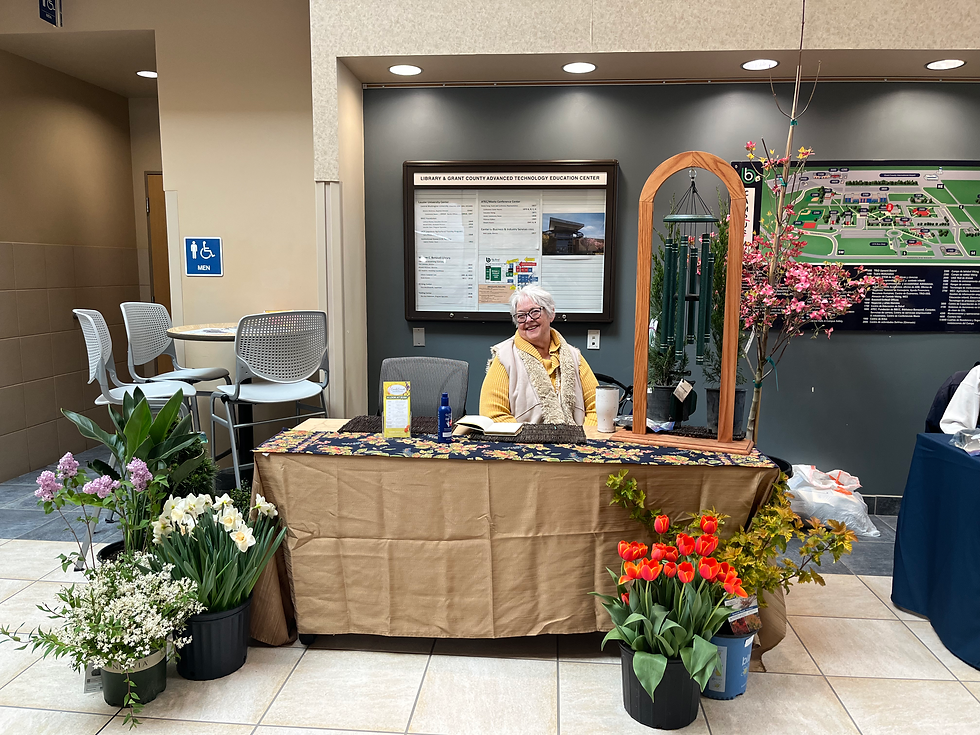
A wide range of local and regional organizations contributed to the success of the symposium, offering resources, expertise, and hands-on learning opportunities throughout the day. Highlights included Cloudview Farm’s display of cover crop samples, such as sudan grass and hairy vetch, where attendees could see nitrogen-fixing nodules up close, and interactive pollinator education from the Washington State Department of Agriculture, featuring bee identification guides and hands-on materials for all ages.
Participating vendors included:
Best-Test Analytical Services
BFI Native Seeds
Central Basin Audubon Society
City of Moses Lake Water Conservation
Cloudview Farm
Columbia Basin Conservation District
Crab Creek Gardens
Ephrata Seed Library
Grant County Solid Waste
Master Gardener Foundation of Grant-Adams Counties (Plant Sale)
Moses Lake Watershed Council
USDA Natural Resources Conservation Service (NRCS)
Noxious Weed Control Board of Grant County
Washington Department of Fish & Wildlife
Washington Native Bee Society
Washington State University Bee Program
WSU Extension Grant-Adams Master Gardeners plant clinic

The event was co-sponsored by the WSU Master Gardeners and the Columbia Basin Conservation District, with major support from Salmon-Safe, an organization that recognizes farms and vineyards committed to water efficiency, integrated pest management, and protecting stream habitat.
The strong turnout and engagement throughout the day reflect a growing interest in sustainable gardening practices across Grant and Adams counties, and a shared commitment to cultivating healthier landscapes, communities, and food systems.


Comments